



Are men or women more likely to receive scientific article retraction? New study finds out
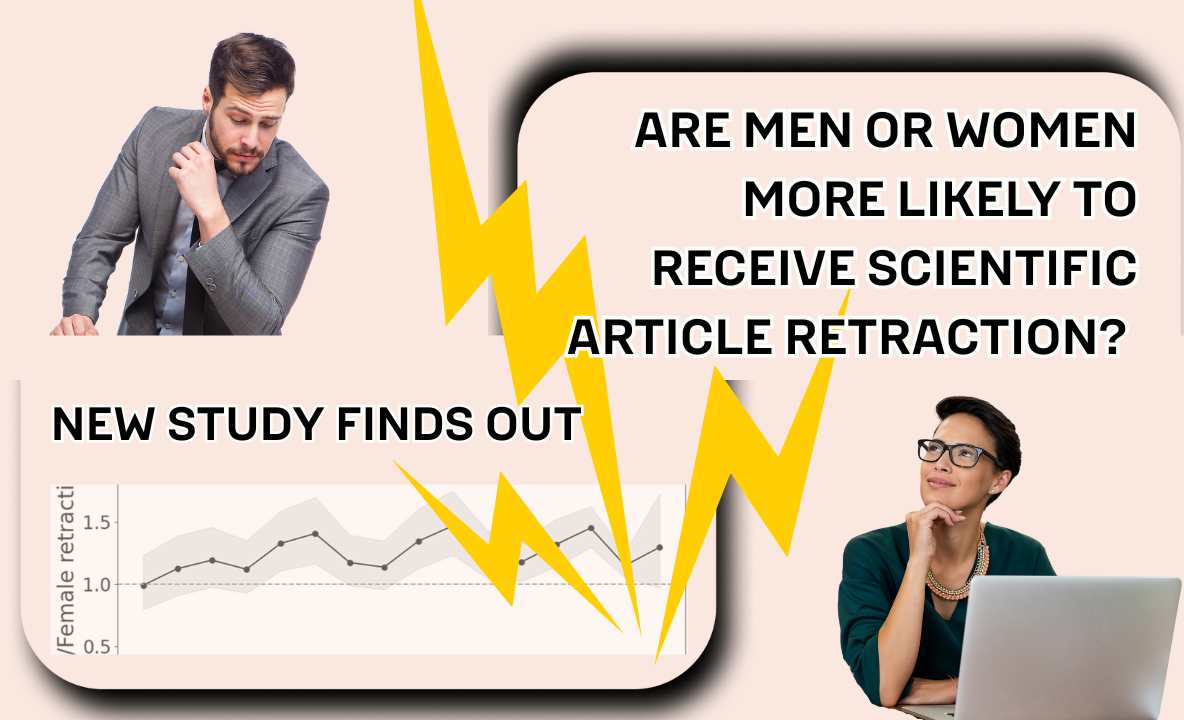
The paper, published May 20, 2025 in the Journal of Informetrics, is the first large-scale study using the ratio of men’s and women’s retraction rates, said study coauthor Er-Te Zheng, a data scientist at The University of Sheffield. The researchers also analyzed gender differences in retractions across scientific disciplines and countries.
Zheng and his colleagues examined papers from a database of over 25 million articles published from 2008 to 2023, about 22,000 of which were retracted. They collected the reasons for retraction from the Retraction Watch Database, and used several software tools to infer each author’s gender based on name and affiliated country.
Whether looking at first authors or corresponding authors, men had an overall higher overall rate of retraction than did women, but the researchers found no difference when looking at papers retracted due to mistakes. Among the 10 countries with the most retracted articles, among first authors, men had a higher retraction rate than women in Iran, Pakistan, and the United States. Women had higher retraction rates in China and Italy, though the researchers noted that the data from China needs further validation, as over 80% of the authors with unidentified gender were affiliated with Chinese institutions. Men had higher retraction rates in biomedical and health sciences, and life and earth sciences.
Source https://retractionwatch.com/2025/07/01/men-women-retractions-gender-retraction-ratio/
Another high-profile case has interested scientists. Read now



.jpg)